
Central Papua— A total of 11 training participants from Central Papua Province, currently enrolled in the Safety K3 class, have now entered the fourth module of their training: LOTO (Lock Out Tag Out). This module is a crucial part of the Occupational Safety and Health (K3) training program. The training is being conducted at the Somatua Training Center, located on Jalan Cendrawasih, SP II, Timika, Central Papua.
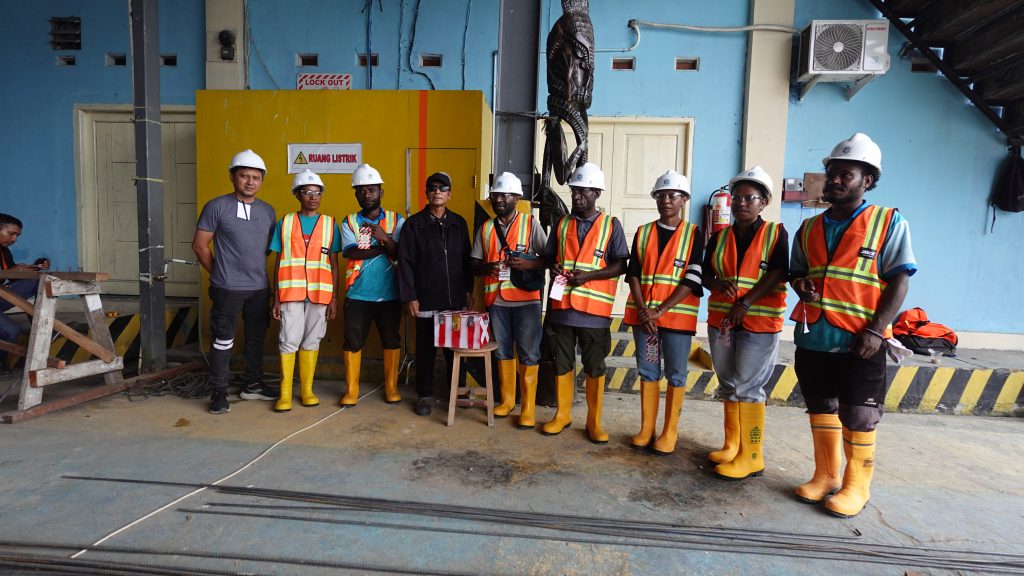
The LOTO module is known as a critical safety procedure in the workplace, especially in high-risk industrial environments. Its main purpose is to ensure that all sources of hazardous energy are properly shut off (lock out) and clearly marked (tag out) before any maintenance or repair work is carried out. This procedure helps prevent accidents caused by the unintentional release or activation of energy.
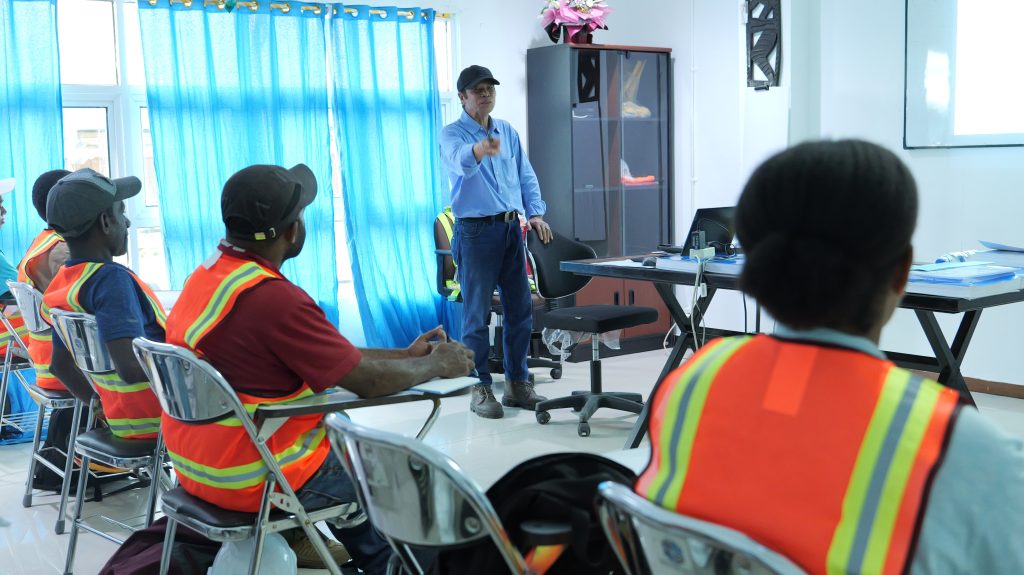
Training instructor Subhana Simamora expressed his appreciation for the enthusiasm shown by the participants in learning and applying the material. “After I delivered the theoretical part, all the students followed along with great enthusiasm. During the practical session, I could clearly see that they truly understood the LOTO procedure and executed it according to the proper standards. It was as if they were already professional employees who routinely perform this procedure in the field,” said Subhana.
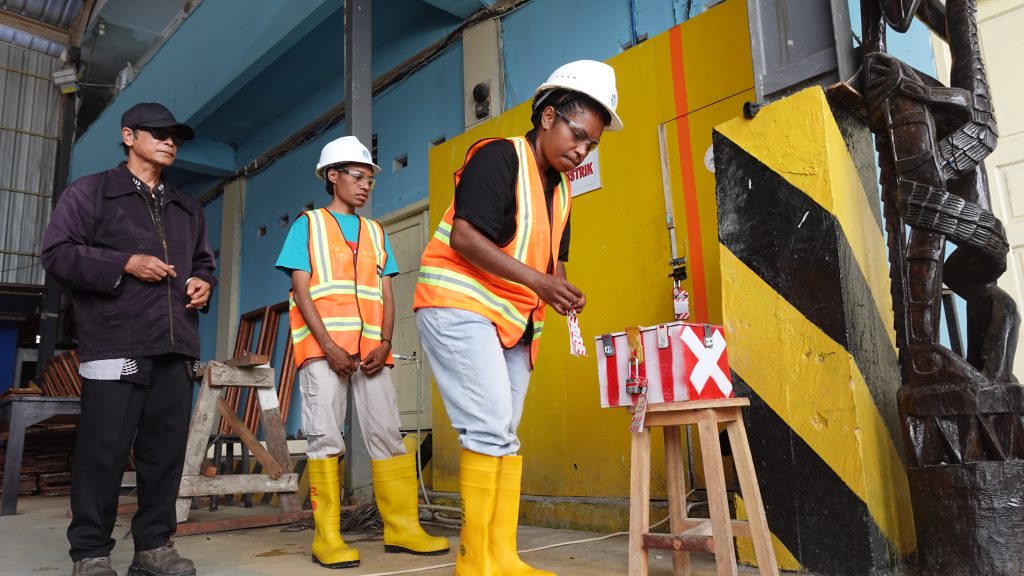
The training is conducted in an integrated manner, combining classroom-based theoretical learning with hands-on field practice. This approach reflects Somatua Training Center’s commitment to preparing a workforce from Central Papua that is not only technically skilled but also highly aware of workplace safety standards.
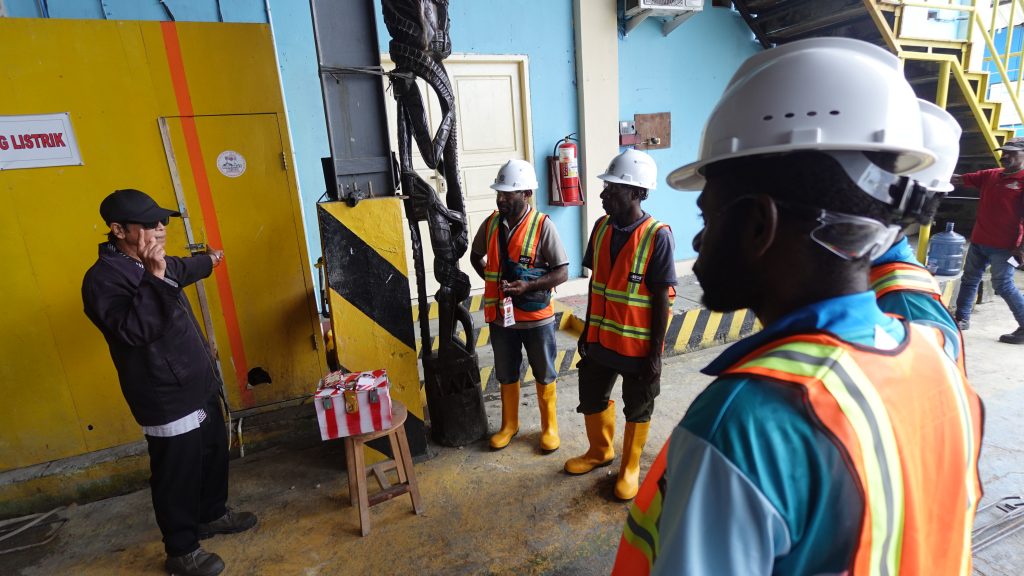
The Safety K3 training program is a tangible example of the synergy between the government and training institutions in promoting competency development and a strong safety culture among the younger generation.
With a solid understanding and growing proficiency in LOTO procedures, the students are expected to be well-prepared to face the challenges of the workforce while upholding the highest safety standards. (STC)
 English
  Indonesian
No responses yet